The Problem: Fire Risk Isn’t Just About the Grill — It’s About Where It Sits
Most homeowners think grill safety comes down to one thing: cleanliness.
If the grates are clean and there’s no heavy grease buildup, the grill should be safe to use. That assumption makes sense, but in Santa Rosa, it’s incomplete.
A grill can be perfectly maintained and still be positioned in a way that increases fire risk.
This is where problems start:
- Flames behaving unpredictably
- Heat building up in the wrong areas
- Fire spreading beyond the grill itself
In many cases, it’s not the grill that’s the issue. It’s everything around it.
Santa Rosa conditions make placement a bigger factor than most people expect. Where your grill sits can either contain risk or amplify it.
Why Santa Rosa Conditions Make Placement More Important
In Santa Rosa, the environment does a lot of the work when it comes to fire behavior.
Several local factors increase sensitivity to placement.
Dry Air and Flammable Surroundings
During dry periods, nearby materials become more vulnerable:
- Wooden fences and decks
- Outdoor furniture
- Landscaping and dry plants
These don’t need direct flame to become a problem. Radiant heat alone can start to dry and stress nearby materials.
Wind Changes Everything
Wind is one of the biggest variables.
It can:
- Push flames sideways
- Pull heat toward structures
- Intensify flare-ups instantly
A grill that feels controlled on a calm day can behave completely differently with even moderate wind.
Heat and Sun Exposure
Santa Rosa grills often sit in direct sun.
That means:
- The grill is already hot before cooking starts
- Surrounding surfaces are pre-heated
- Grease ignites faster
This compounds risk, especially during peak summer months.
Fire-Aware Environment
Santa Rosa isn’t just another location. It’s a fire-conscious region.
That means:
- Lower margin for error
- Faster escalation when something goes wrong
- Greater importance on prevention, not reaction
Even small placement mistakes can carry bigger consequences here.
Common Grill Placement Mistakes (That Increase Risk)
Most placement issues aren’t obvious. They come from setups that feel normal but create hidden risk.
Here are the most common ones.
- Too close to walls or siding
Heat reflects and builds up, increasing the chance of damage or ignition over time - Grilling near dry plants or landscaping
Dry leaves, branches, or mulch can ignite from heat or stray flare-ups - Side exposure to wind
Wind hitting the side of the grill can push flames outward instead of upward - Under low overhangs or eaves
Traps heat and smoke, increasing both fire risk and structural stress - Unstable or uneven surfaces
Small shifts can change how grease flows or how flames behave
None of these require a major mistake to become a problem. They just need the right conditions.
Where You Place Your Grill in Santa Rosa Can Increase Fire Risk (Most People Miss This)
What Safer Grill Placement Looks Like in Santa Rosa
Safer placement isn’t complicated, but it is intentional. Small adjustments in positioning can dramatically reduce how fire behaves around your grill.
Give your grill real space
Clearance matters more than most people think.
A safer setup includes:
- Several feet of space from walls, siding, or fences
- Open space above the grill (no low overhangs)
- Enough room for heat to dissipate naturally
If heat has nowhere to go, it builds up and starts affecting nearby surfaces.
Work with the wind, not against it
Instead of fighting wind, position the grill so it works in your favor.
- Place the back of the grill toward prevailing wind
- Avoid side exposure where wind can push flames outward
- Keep open areas in front of the grill, not behind it
This keeps flames moving upward instead of spreading unpredictably.
Choose the right surface
What your grill sits on matters just as much as what’s around it.
Safer surfaces:
- Concrete or stone
- Pavers
- Level, non-flammable ground
Higher-risk surfaces:
- Dry wood decks (without protection)
- Uneven ground
- Areas with debris underneath
A stable base keeps flame behavior consistent and predictable.
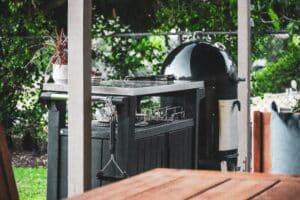
Be intentional with built-in setups
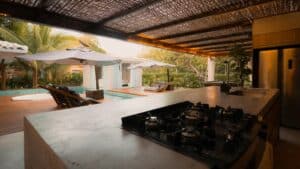
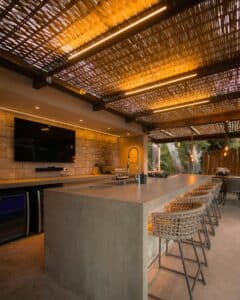
Built-in grills and outdoor kitchens can look clean, but they often reduce airflow.
Make sure:
- There’s ventilation around the unit
- Heat isn’t trapped between walls or cabinetry
- Materials around the grill can handle sustained heat
A clean design doesn’t always mean a safe one.
Reducing Risk Without Moving Your Grill Completely
Not everyone can relocate their grill. The good news is you can still lower risk with a few smart adjustments.
Clear the immediate area
Start simple:
- Move dry plants or materials away from the grill
- Remove debris from underneath and behind
- Keep a clean perimeter around the cooking zone
Less fuel nearby = less risk if flames spike.
Adjust for conditions, not just setup
Your setup might be fine on a calm day, but not in changing conditions.
When it’s windy or extremely dry:
- Cook at lower heat levels
- Keep the lid closed more often
- Avoid foods that produce heavy grease flare-ups
This works alongside what you already learned in Why Grill Flare-Ups Are More Common in Santa Rosa, where conditions play a major role in flame behavior.
Use temporary control, not permanent fixes
Sometimes small temporary changes are enough:
- Reposition slightly to reduce wind exposure
- Add distance between grill and surroundings during use
- Cook in a more open part of the yard when conditions are worse
You don’t always need a full redesign. You just need better control during use.
When Placement + Conditions Become Too Risky
There are situations where no setup is safe enough.
Pay attention to conditions like:
- Strong or shifting winds
- Extremely dry days
- High heat combined with low humidity
- Local fire warnings or red flag alerts
In these cases, even a well-placed grill can become unpredictable.
The safest move isn’t adjustment. It’s postponing use.
In Santa Rosa, part of grilling responsibly is knowing when not to grill at all.
When It’s Time to Bring in a Professional
Sometimes the issue isn’t just how you’re using the grill. It’s how it’s set up.
If your grill is in a fixed position or built into an outdoor space, correcting placement and airflow isn’t always something you can adjust on your own.
It’s worth getting professional input when:
- The grill is installed close to walls, cabinetry, or overhead structures
- You’re seeing repeated flare-ups tied to location, not grease
- Heat feels trapped around the grill during use
- The setup limits airflow or access for safe operation
- You’re unsure if your current layout meets safe clearance standards
In these cases, the goal isn’t just cleaning or repair. It’s making sure the grill operates safely within its environment.
That’s where a Santa Rosa grill cleaning service or inspection can help identify risks that aren’t obvious during normal use and correct them before they become real hazards.
The Bottom Line for Santa Rosa Grill Owners
In Santa Rosa, grill safety isn’t just about how clean your grill is. It’s about where it sits and how it interacts with its surroundings.
Dry air, wind, and heat make flame behavior less predictable, which means placement plays a much bigger role than most people expect. A grill that’s perfectly safe in one position can become risky in another without any change to the grill itself.
The good news is most risks come from small, fixable factors. A bit more space, better positioning, and awareness of conditions can significantly reduce fire risk.
In a fire-conscious area like Santa Rosa, those small adjustments aren’t optional. They’re what keep grilling both enjoyable and safe.