Introduction
Few things are more frustrating than firing up your grill only to find that the burners won’t light, won’t stay lit, or don’t heat evenly. Sometimes you hear the igniter clicking with nothing happening. Other times the grill lights, but the flames are weak, uneven, or die out halfway through cooking.
Burner problems are common, and they’re rarely random. In most cases, they’re caused by buildup, airflow issues, or worn components that develop gradually over time. The good news is that many burner issues can be diagnosed — and sometimes fixed — without immediately replacing the grill.
This guide walks through how grill burners are supposed to work, the warning signs something’s wrong, and how to tell whether you’re dealing with a cleaning issue, a repair, or a replacement situation.
How Grill Burners Are Supposed to Work
Grill burners rely on a balance of gas flow, air intake, and ignition. When everything is working correctly, gas flows through the burner, mixes with air, and ignites into a steady blue flame that runs evenly along the burner ports.
Here’s the simplified process:
- Gas flows from the tank or line through the regulator
- Gas travels through the manifold into the burner
- Air enters through venturi tubes to mix with gas
- The igniter creates a spark
- The gas-air mixture ignites and burns evenly
If any part of that chain is disrupted — even slightly — burner performance suffers. A blocked air intake, a dirty burner port, or a weak spark can all produce the same result: burners that don’t light or don’t heat properly.
Because burners sit directly below grease, food drippings, and heat shields, they’re especially vulnerable to buildup and corrosion. That’s why burner problems often show up after periods of inactivity or after grease buildup has gone unchecked.
Common Signs Your Grill Burners Have a Problem
Burner issues don’t always look the same. Recognizing the symptoms helps narrow down the cause quickly.
Burners won’t light at all
You may hear the igniter clicking but see no flame. This often points to clogged burner ports, blocked airflow, or a failed igniter.
Burners light but go out
If flames start and then disappear, the issue is often restricted gas flow, moisture in the system, or debris inside venturi tubes.
Weak or uneven flames
Small, lazy flames or flames that only appear on part of the burner usually indicate clogged ports or grease buildup interfering with airflow.
Hot spots and cold zones
If one side of the grill heats well while the other stays cool, burner ports may be blocked or heat shields may be misaligned. This often overlaps with the uneven heat problems many grill owners experience.
Igniter clicks but ignition is delayed
Delayed ignition can cause small gas buildups before lighting, leading to mini flare-ups or “whooshing” sounds. This is usually a sign the spark isn’t reaching the gas consistently.
These symptoms tend to worsen over time if left alone. What starts as a minor ignition issue can turn into uneven cooking, flare-ups, or full burner failure.
Most Common Causes of Burner Problems
Once you know how burners are supposed to work, the causes behind most problems become much easier to spot. In real-world service calls, burner issues usually fall into a few predictable categories.
Grease and debris buildup
Grease dripping from food doesn’t just collect in trays — it splashes onto burners and hardens over time. This blocks burner ports and restricts airflow, leading to weak or uneven flames.
Clogged burner ports
Burner ports are the small holes that release gas. When they’re blocked by grease, carbon, or rust flakes, gas can’t exit evenly. This causes flames to appear only in certain sections or not at all.
Insects or spider webs in venturi tubes
This is more common than most people realize, especially if a grill sits unused. Spiders are attracted to the smell of gas and build webs inside venturi tubes, blocking airflow and preventing ignition.
Corrosion and rust
Burners are exposed to heat and moisture constantly. Over time, metal weakens, cracks form, and ports deform. Once corrosion reaches this stage, cleaning alone usually isn’t enough.
Ignition system failure
A worn igniter, dirty electrode, or loose wire can prevent a strong spark. Even if gas is flowing properly, weak ignition causes delayed lighting or no flame at all.
Gas flow or regulator issues
Low gas pressure, kinked hoses, or failing regulators reduce fuel supply. This leads to small flames or burners that won’t stay lit.
Understanding which of these applies saves time and prevents unnecessary part replacement.
How to Diagnose Burner Problems Step-by-Step
Before replacing anything, a basic diagnosis can often pinpoint the issue.
Step 1: Inspect the flame
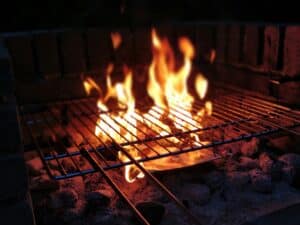
Light the grill and observe the flames. Healthy flames are mostly blue with small yellow tips. Yellow, uneven, or sputtering flames indicate airflow or blockage issues.
Step 2: Check burner ports
Turn off the grill and remove the grates and heat shields. Look closely at the burner holes. If they’re blocked or uneven, cleaning may restore performance.
Step 3: Inspect venturi tubes
Check the air intake openings for spider webs, grease, or debris. Clear them carefully without enlarging openings or damaging components.
Step 4: Test the igniter
Click the igniter and watch for a strong, visible spark. If the spark is weak, delayed, or inconsistent, ignition components may need cleaning or replacement.
Step 5: Check gas flow
Make sure the gas tank is full and the hose isn’t kinked. If flames are weak across all burners, the regulator may be restricting flow.
Step 6: Re-test heat distribution
After cleaning or adjustments, reassemble the grill and test heat distribution. If uneven heat persists, burner damage or internal misalignment may be the cause.
Many burner issues resolve during this process. If not, it usually means components are worn beyond cleaning.
Cleaning vs Repair vs Replacement
Once you’ve diagnosed the issue, the next question is what level of fix actually makes sense. Not every burner problem requires replacement, but not every problem can be cleaned away either.
When cleaning is enough
- Burner ports are blocked but metal is intact
- Flames improve after debris is cleared
- Ignition works but was delayed
- Grill hasn’t been neglected for long
In these cases, a thorough cleaning and reassembly often restores normal performance.
When repair is needed
- Igniters spark inconsistently
- Electrodes are dirty or misaligned
- Heat shields are warped or rusted
- Gas flow is restricted by a failing regulator
Repairs usually involve replacing small components rather than the entire burner system.
When replacement is the smarter option
- Burners are cracked, heavily rusted, or flaking
- Ports are enlarged or uneven from corrosion
- Flames remain weak after cleaning
- Multiple burners are failing at once
At this stage, replacement is safer and more cost-effective than repeated cleaning attempts.
When Burner Issues Require Professional Help
Any time gas flow, ignition reliability, or structural integrity is in question, professional service is the safest move.
You should bring in a professional when:
- Burners repeatedly fail to light
- Flames go out unexpectedly
- Gas smells are present
- Multiple components show corrosion
- DIY fixes don’t improve performance
At Fire & Metal, our grill repair service focuses on identifying the root cause, not just swapping parts. We inspect burners, ignition systems, airflow, and gas delivery together, because these systems affect each other.
Professional diagnosis prevents unnecessary replacements and ensures your grill operates safely.
Conclusion
Burner problems are frustrating, but they’re rarely a mystery. Most issues trace back to airflow restrictions, grease buildup, corrosion, or worn ignition components — all of which develop gradually.
TL;DR: If your grill burners won’t light or heat properly, start by checking for buildup, blocked ports, and airflow issues. Clean first, repair small components when needed, and replace burners once corrosion sets in. Don’t ignore gas or ignition issues — safety always comes first.
If uneven cooking has been part of the problem, our guide on why grills stop heating evenly explains how burner issues affect performance across the grill.