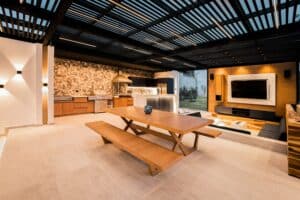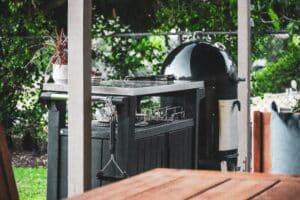
An outdoor refrigerator is one of those upgrades that sounds essential when you’re planning an outdoor kitchen. Cold drinks stay within reach, ingredients can remain outside while you’re cooking, and you don’t have to keep walking back into the house.
But not every outdoor kitchen needs one.
A refrigerator takes up cabinet space, requires electricity, adds to the project cost, and needs to be properly rated for outdoor conditions. If your indoor refrigerator is only a few steps away, that convenience may not justify the extra appliance.
For homeowners who entertain frequently or spend hours outside cooking, though, an outdoor refrigerator can quickly become one of the most-used appliances in the kitchen.
What Do You Actually Use an Outdoor Refrigerator For?
Most homeowners aren’t trying to replace their main refrigerator. An outdoor model usually acts as convenient temporary storage while cooking and entertaining.
Common uses include:
- Drinks and bottled water
- Condiments
- Marinades and sauces
- Produce
- Ingredients being used during cooking
- Prepared side dishes
- Food waiting to go onto the grill
The biggest advantage is workflow.
If you’re grilling while entertaining guests, repeatedly walking inside for another ingredient, drink, or condiment gets old quickly. Keeping frequently used items outside allows the cooking area to function more independently.
For someone who cooks outside once or twice a month, that convenience may be minor. For someone who uses the space several nights a week, it can make a noticeable difference.
Can You Put a Regular Refrigerator in an Outdoor Kitchen?
Generally, you should use a refrigerator specifically rated for outdoor installation rather than putting a standard indoor refrigerator outside.
Outdoor refrigerators have to operate under conditions that indoor appliances aren’t designed around. Depending on where the kitchen is located, that can include significant temperature swings, humidity, rain, dust, and prolonged heat.
Outdoor-rated models are designed with those conditions in mind.
There’s another important consideration with built-in refrigerators: ventilation.
Some models are designed to vent through the front so they can safely operate inside outdoor cabinetry. Other refrigerators require additional clearance around the appliance to dissipate heat.
Putting the wrong refrigerator into a tightly enclosed cabinet can reduce efficiency and potentially shorten its lifespan.
That’s why the refrigerator should be selected before the cabinet opening is finalized. The manufacturer’s installation requirements should determine the dimensions, ventilation, electrical access, and necessary clearances—not the other way around.
Can an Outdoor Refrigerator Stay Outside Year-Round?
Usually, yes, if the refrigerator is specifically rated for outdoor use and installed according to the manufacturer’s requirements.
However, “outdoor-rated” doesn’t mean the appliance can operate normally in every possible temperature.
Refrigerators rely on a certain range of ambient temperatures to work properly. Extremely hot or cold conditions can affect performance, and acceptable operating temperatures vary between models.
A few things matter:
- Manufacturer-specified operating temperature range
- Protection from direct rain and standing water
- Proper ventilation
- Adequate airflow around the unit
- A suitable outdoor electrical connection
In colder areas, some manufacturers recommend shutting down or winterizing the refrigerator when temperatures fall below its rated operating range. Always follow the instructions for the specific appliance rather than assuming every outdoor refrigerator can operate continuously throughout winter.
Outdoor Refrigerator vs. Beverage Center
Before automatically adding a refrigerator, think about what you actually want to keep cold.
If the answer is mostly drinks, a beverage center may make more sense.
Outdoor refrigerator
Better when you want to store:
- Cooking ingredients
- Condiments
- Produce
- Prepared foods
- Drinks
Beverage center
Better when the primary goal is:
- Cans
- Bottles
- Water
- Other packaged beverages
A refrigerator provides greater versatility. A beverage center can provide more convenient drink storage without dedicating as much interior space to shelving designed around food.
For homeowners who entertain frequently, the distinction matters. If you’re constantly opening the appliance for drinks but rarely store cooking ingredients outside, choose the appliance around that actual behavior.
Where Should an Outdoor Refrigerator Go?
The refrigerator should be convenient to both the person cooking and anyone grabbing a drink, without creating unnecessary traffic through the cooking area.
Imagine someone standing at the grill while several guests want drinks. If everyone has to walk directly behind or beside the cook to reach the refrigerator, the layout can become frustrating quickly.
A better arrangement often keeps refrigeration:
- Near preparation space
- Easily accessible from the entertaining area
- Away from the hottest cooking equipment
- Clear of major walking paths
- Properly ventilated according to manufacturer requirements
Door swing matters too. A perfectly positioned refrigerator becomes annoying if its door opens into a walkway or blocks the cabinet beside it.
When Is an Outdoor Refrigerator Worth It?
An outdoor refrigerator becomes particularly useful when you:
- Cook outside several times per week
- Frequently entertain
- Have a large backyard separated from the indoor kitchen
- Prepare complete meals outdoors
- Want guests to access drinks without going inside
- Regularly use refrigerated ingredients while grilling
It becomes harder to justify when your indoor refrigerator is immediately inside the patio door and you only grill occasionally.
There’s also an opportunity cost. A refrigerator occupies space that could otherwise become drawers, cabinets, trash storage, or additional preparation space.
If you’ll use those things every weekend and the refrigerator twice per summer, storage probably wins.
Bottom Line: Do You Need a Refrigerator in an Outdoor Kitchen?
No, an outdoor refrigerator isn’t necessary. But for the right household, it can dramatically improve how convenient the kitchen is to use.
Frequent entertainers and homeowners who prepare full meals outside are most likely to appreciate one. Occasional grillers with an indoor kitchen nearby can often put that space and budget to better use elsewhere.
If you do install one, choose a model specifically designed for outdoor conditions and plan its ventilation, electrical requirements, accessibility, and door clearance before building the surrounding cabinetry.
Fire & Metal can incorporate those considerations into a custom outdoor kitchen design and installation so the appliance layout works with how you’ll actually cook and entertain.