The Difference Between “Need” and “Nice to Have”
Most outdoor kitchens get overbuilt because homeowners start with features instead of use. They see pizza ovens, refrigerators, side burners, warming drawers, and built-in bars, and assume that is what a “real” outdoor kitchen requires.
The better question is simpler: how will the space actually be used?
Someone who grills twice a week for family dinners needs something very different from someone hosting large gatherings every weekend. When the usage pattern is unclear, projects expand quickly and budgets follow. That is exactly how kitchens drift away from the original goal and end up feeling heavier than necessary.
Defining what you truly need is also what keeps costs controlled. Many of the decisions come down to scope, not material quality. If the scope is right, the rest becomes manageable.
Before adding appliances, start by defining frequency of use, number of typical guests, and how much prep actually happens outside. That clarity shapes everything else.
The Core Essentials Every Functional Outdoor Kitchen Needs
If the goal is a kitchen that works, not one that simply looks complete, there are three foundational elements.
1. A reliable primary cooking appliance
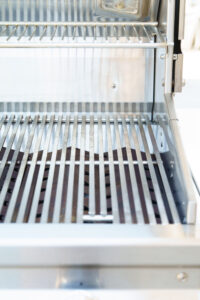
Every outdoor kitchen needs a dependable grill or cooking unit sized appropriately for how it will be used. Built-in grills create a cohesive look and can integrate cleanly into countertops. Freestanding grills are more flexible and often less expensive. The key is performance and reliability, not the number of burners.
2. Adequate prep and landing space
Counter space is one of the most underestimated necessities. Without space to stage food, hold utensils, and rest hot trays, even a high-end grill feels cramped. Many kitchens that appear impressive lack practical landing zones. That imbalance is one of the most common planning errors seen in common outdoor kitchen mistakes.
3. Weather-rated structure and materials
Outdoor kitchens live in heat, moisture, grease, and UV exposure. Framing, cabinetry, and surfaces must tolerate those conditions. Materials designed only for interior use deteriorate quickly outside. The structure is not a cosmetic detail. It determines whether the kitchen will hold up for years or require constant repair.
These three elements form the minimum foundation. Everything else builds on top of them.
Utilities – What Is Actually Required?
Utilities are where “needs” become situational.
Gas or fuel access
If a built-in gas grill is part of the plan, proper gas sizing and routing are essential. For simpler setups, propane tanks may be sufficient. The decision depends on long-term expectations and whether future expansion is likely.
Electrical access
At minimum, lighting often benefits from dedicated outdoor-rated circuits. Refrigeration, outlets for small appliances, or entertainment features require more thoughtful planning. Electrical work should always account for weather protection and code requirements.
Water and sink
A sink is helpful but not always necessary. It makes sense when food prep happens fully outdoors or when the kitchen is far from indoor plumbing. In smaller or patio-adjacent builds, a sink adds complexity without proportionate benefit. According to guidance from the National Kitchen & Bath Association, utility placement should be evaluated early in the design process to avoid expensive retrofits (https://nkba.org).
Utilities are not about luxury. They are about safety, efficiency, and planning for future use. Deciding correctly here prevents structural rework later.
Features That Are Nice, But Not Essential
Once the core elements are covered, many homeowners start layering in upgrades. These can absolutely improve the experience, but they are not required for a functional outdoor kitchen.
Common upgrades include:
Side burners
Useful for sautéing or boiling without going back inside. Not necessary if most cooking is grill-focused.
Refrigeration
Convenient for entertaining, especially in larger yards. Less critical if the indoor kitchen is only a few steps away.
Ice makers or beverage centers
Helpful for frequent hosting. Overkill for occasional use.
Pizza ovens or specialty appliances
Fun and impressive, but highly usage-dependent. These make sense when there is a clear, repeated purpose.
The problem is not these features themselves. The issue is adding them before understanding how the space will be used. Overloading a layout with appliances often creates congestion, higher costs, and maintenance demands that outweigh the benefit. That pattern shows up repeatedly in kitchens that later feel misaligned with their original goals, which is why scope clarity matters before upgrades.
Layout Requirements Most Homeowners Overlook
Layout determines whether an outdoor kitchen feels natural or awkward. Even a well-built kitchen underperforms if traffic flow and clearances are ignored.
A few layout principles matter most:
Clear movement paths
Guests should not have to walk through the cooking zone to reach seating. Cooking areas need defined boundaries.
Adequate spacing around heat sources
Grills generate significant heat. Clearance prevents discomfort and protects nearby surfaces.
Prep-to-cook proximity
Counter space should sit immediately adjacent to the grill. Walking across the kitchen with hot food increases risk and inconvenience.
Ventilation and overhead considerations
Covered outdoor kitchens require proper ventilation to prevent smoke buildup and heat trapping. Utility planning and hood sizing should align with appliance output and structure design.
These are not decorative concerns. They affect safety, comfort, and how often the kitchen gets used. This is where experienced planning makes a noticeable difference. Homeowners who work with teams focused specifically on outdoor kitchen design and installation typically avoid the traffic and clearance issues that lead to later frustration.
How to Scale an Outdoor Kitchen Without Regret
The safest way to approach an outdoor kitchen is to build for today while preparing for tomorrow.
Start with:
- A strong structural base
- Properly sized utilities
- Enough prep space to function comfortably
Then allow upgrades to come later. Adding appliances in phases reduces pressure to overspend upfront and gives homeowners time to see how the space is actually used.
Scaling gradually also protects against regret. A kitchen that grows based on real habits is almost always more satisfying than one built all at once based on assumptions.
Bottom Line – What You Actually Need
What you really need in an outdoor kitchen is simpler than most people think: a reliable cooking appliance, functional prep space, durable materials, and correctly planned utilities.
Everything beyond that should be driven by frequency of use and lifestyle, not aesthetics or comparison. Defining essentials early keeps the project aligned, reduces unnecessary spending, and prevents many of the issues that show up in poorly planned builds.
A well-planned outdoor kitchen does not need every possible feature. It needs to work consistently, safely, and comfortably for the way it will actually be used.