The Problem: Grill Flare-Ups That Feel Sudden and Unpredictable
Many Santa Rosa homeowners notice that grill flare-ups feel more aggressive and harder to control than expected. Flames jump higher than the grates, show up at moderate temperatures, or appear the moment food hits the grill, even when everything looks reasonably clean.
What makes this unsettling is how fast it happens. A grill can go from normal cooking to a wall of flame in seconds, especially during warmer months. For people already conscious of fire safety, that unpredictability creates real concern, not just frustration.
In Santa Rosa, this isn’t usually about poor technique or neglect. It’s about how local conditions affect grease ignition and flame behavior, making flare-ups feel more intense and less forgiving than in cooler or more humid areas.
Why Santa Rosa’s Climate Increases Flare-Up Risk
Santa Rosa’s environment changes how fire behaves on a grill.
Several factors stack together:
- Dry air allows grease vapors to ignite more easily
- Heat and sun exposure warm the grill body even before cooking starts
- Wind feeds flames and spreads them faster once ignition happens
- Low humidity prevents grease from breaking down slowly, leading to sudden ignition instead
Grease doesn’t always burn evenly in these conditions. It can dry out on surfaces, then ignite all at once when heat spikes or food drips hit hot zones. Wind makes this worse by pushing flames sideways or pulling them upward when the lid is opened.
This is why flare-ups in Santa Rosa often feel stronger than what homeowners experienced in cooler or coastal locations. The grill isn’t necessarily dirtier. The environment is simply less forgiving.
How to Tell If a Flare-Up Is a Safety Issue (Not Just Normal Grilling)
Not every flare-up is dangerous. Some flame activity is expected when fat drips onto hot surfaces. The key is knowing when it crosses from normal to risky.
Signs a flare-up may be a safety issue include:
- Flames repeatedly shooting above the cooking surface
- Grease igniting even at medium heat settings
- Flames spreading under the grates instead of staying localized
- Strong burning smells before food is added
- Difficulty controlling flames with lid position or burner adjustments
Normal flare-ups tend to be brief and manageable. Safety-related flare-ups keep returning, grow quickly, or feel uncontrollable, especially when wind is involved.
If flare-ups are happening frequently despite reasonable cleaning and normal cooking habits, the issue is likely deeper than surface residue. At that point, focusing only on brushing grates won’t address the real risk.
What Actually Reduces Flare-Ups on Santa Rosa Grills
In Santa Rosa, flare-ups are less about cooking mistakes and more about how grease, airflow, and heat interact in dry, windy conditions. Reducing them starts with changing how you manage grease, not just how often you clean.
Stop relying on aggressive burn-offs
High-heat burn-offs are often used to “clean” a grill, but in dry conditions they can make flare-ups worse. Burning grease at extreme temperatures dries it out unevenly, creating brittle, highly flammable residue that ignites quickly during the next cook.
A controlled approach works better:
- Moderate preheats instead of full-blast burns
- Removing grease mechanically instead of trying to incinerate it
- Letting the grill cool before cleaning so grease lifts instead of smears
This is especially important if grease buildup has already become a recurring issue, as explained in What’s the Best Way to Clean a Grill? (And What Not to Use).
Control airflow during cooking
Wind plays a bigger role in Santa Rosa than most homeowners expect. Open lids, misaligned heat shields, or damaged burner covers allow flames to surge when wind hits hot zones.
To reduce flare-ups:
- Keep the lid closed as much as possible during cooking
- Position the grill so prevailing wind hits the back, not the sides
- Make sure heat tents and burner covers are properly seated
- Avoid overcrowding food, which increases grease dripping all at once
Adjust cooking habits for fire season
During peak fire season, small adjustments matter more:
- Trim excess fat from meats before grilling
- Avoid cooking very greasy foods at maximum heat
- Let grills preheat gradually instead of jumping straight to high
These steps don’t eliminate flare-ups entirely, but they make them predictable and controllable instead of sudden and dangerous.
Preventing Fire Risk Between Cooks
In Santa Rosa, flare-up prevention starts between grilling sessions, not just during them.
Manage grease before it becomes fuel
Grease that sits in drip trays, firebox corners, or burner shields dries out in low humidity and becomes highly flammable. Regularly clearing these areas reduces the amount of fuel available for ignition.
Helpful habits include:
- Emptying drip trays before they fill
- Wiping visible grease from internal surfaces periodically
- Avoiding long gaps between light maintenance checks
Store grills with fire risk in mind
Dry, windy conditions mean covers and placement matter:
- Use breathable covers that don’t trap heat
- Avoid placing grills near dry vegetation or structures
- Keep grills fully cool before covering
Know when not to grill
There are days when conditions simply aren’t forgiving. High winds, extreme heat, and red-flag warnings increase risk regardless of grill condition. Skipping a cook on those days isn’t overreacting. It’s smart prevention.
Flare-ups in Santa Rosa aren’t random. They’re the result of predictable conditions that can be managed with the right habits and awareness.
When It’s Time to Call a Professional in Santa Rosa
In Santa Rosa, flare-ups become a professional issue when safety is no longer predictable. If flames keep returning despite reasonable cleaning and careful cooking habits, the risk usually isn’t on the grates. It’s deeper in the grill.
It’s time to stop DIY and get help when:
- Flare-ups happen every time you cook, even at medium heat
- Flames spread underneath the grates instead of staying localized
- Grease is visibly built up near burners or ignition components
- Burner covers or heat tents are warped, misaligned, or heavily saturated
- Wind causes flames to surge uncontrollably during normal use
- The grill is older, built-in, or difficult to access internally
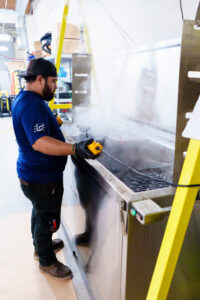
At this stage, aggressive cleaning or burn-offs can actually increase fire risk by igniting trapped grease or damaging components that help control flame spread. Professional service allows for controlled degreasing, internal access, and proper reassembly so airflow and heat are managed safely.
This is typically when a Santa Rosa grill cleaning service becomes about reducing real fire risk, not just improving how the grill looks.
The Bottom Line for Santa Rosa Grill Owners
Grill flare-ups are more common in Santa Rosa because dry air, heat, and wind make grease ignite faster and burn more aggressively. What feels sudden or unpredictable is usually the result of conditions that are less forgiving than in cooler or more humid areas.
Reducing flare-ups isn’t about cooking differently every time. It’s about managing grease before it dries into fuel, controlling airflow during cooking, and recognizing when cleaning alone isn’t enough. Small changes between cooks make a big difference when fire risk is higher.
In Santa Rosa, knowing when to stop DIY and address flare-ups early helps protect your grill, your home, and everyone around it.