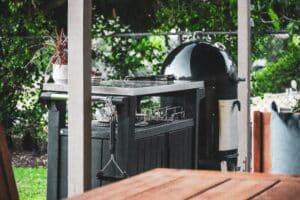
Marine-grade polymer cabinets have become one of the most popular alternatives to stainless steel for outdoor kitchens. Designed specifically to withstand harsh weather conditions, they offer impressive durability without many of the maintenance requirements associated with wood or other traditional cabinet materials.
While they may not have the same commercial appearance as stainless steel, marine-grade polymer cabinets excel in environments where moisture, humidity, and constant sun exposure are everyday challenges.
The question isn’t whether polymer cabinets can be used outdoors—they’re built for it. The better question is whether they’re the right fit for your outdoor kitchen and your budget.
What Are Marine-Grade Polymer Cabinets?
Marine-grade polymer is a high-density polyethylene (HDPE) material engineered to resist the elements.
Unlike wood, it won’t absorb water. Unlike metal, it won’t rust or corrode. And unlike lower-quality plastics, it’s specifically manufactured to handle years of outdoor exposure.
These cabinets are commonly found in:
- Outdoor kitchens
- Coastal homes
- Poolside entertainment areas
- Commercial outdoor spaces
- Marine environments
Because they’re designed for harsh conditions, polymer cabinets are often chosen by homeowners looking for durability with minimal maintenance.
How Marine-Grade Polymer Performs Outdoors
Outdoor cabinets have to withstand much more than occasional rain.
They deal with:
- UV exposure
- Moisture
- Temperature fluctuations
- Grease and food residue
- Dirt and pollen
- Everyday wear from cooking and entertaining
Marine-grade polymer performs exceptionally well in these conditions.
Moisture resistance
Because the material is non-porous, it won’t swell, rot, or delaminate when exposed to rain or humidity.
UV resistance
Quality polymer cabinets are designed to resist fading and discoloration far better than many traditional outdoor materials.
Insect resistance
Unlike wood, polymer isn’t vulnerable to termites or other insects that can damage cabinetry over time.
Low maintenance
Most cleaning simply involves soap, water, and a soft cloth, making polymer one of the easiest cabinet materials to care for.
The Biggest Pros and Cons of Marine-Grade Polymer Cabinets
Marine-grade polymer has earned a strong reputation because it solves many of the common problems homeowners face with outdoor cabinetry. Still, no material is perfect, and it’s important to understand both the advantages and the trade-offs before making a decision.
Advantages
Excellent weather resistance
Marine-grade polymer is designed for outdoor environments. It won’t rot, swell, or deteriorate when exposed to rain, humidity, or changing temperatures.
Won’t rust or corrode
Unlike metal, polymer doesn’t corrode, making it an especially attractive option for homes in coastal areas where salt air can accelerate corrosion on lower-quality materials.
Minimal maintenance
Polymer cabinets don’t need staining, painting, or sealing. Routine cleaning with mild soap and water is usually all that’s required to keep them looking their best.
Resistant to insects
Because polymer isn’t made from wood, termites and other wood-destroying insects aren’t a concern.
Trade-Offs
Marine-grade polymer performs exceptionally well outdoors, but there are a few considerations.
- Premium polymer cabinets can still represent a significant investment.
- They generally don’t have the same high-end, commercial appearance as stainless steel.
- While extremely durable, polymer can still develop surface scratches from heavy use.
- Color and style options vary by manufacturer and may be more limited than custom-built cabinetry.
For many homeowners, these trade-offs are minor compared to the long-term durability and low maintenance polymer offers.
Marine-Grade Polymer vs. Stainless Steel Cabinets
Marine-grade polymer and stainless steel are widely considered two of the best materials for outdoor kitchen cabinets. The right choice comes down to your priorities.
| Feature | Marine-Grade Polymer | Stainless Steel |
|---|---|---|
| Moisture Resistance | Excellent | Excellent |
| Rust Resistance | Excellent | Excellent |
| Maintenance | Very Low | Low |
| Appearance | Residential and versatile | Modern and professional |
| Heat Retention | Stays cooler in the sun | Can become warm in direct sunlight |
| Durability | Excellent | Excellent |
If you prefer a warm, residential appearance with very little upkeep, marine-grade polymer is often the better choice.
If you’re aiming for a sleek, contemporary outdoor kitchen with matching stainless steel appliances, stainless steel may be the better fit.
Neither material is objectively better—they simply appeal to different design preferences.
When Marine-Grade Polymer Is the Best Choice
Marine-grade polymer is an excellent option for homeowners who want an outdoor kitchen that’s built to last without requiring ongoing maintenance.
It’s especially well suited for:
- Homes in humid or rainy climates
- Coastal properties where corrosion resistance is important
- Families who use their outdoor kitchen regularly
- Homeowners who want durable materials without the maintenance of wood
When designing a custom outdoor kitchen, choosing cabinet materials that fit your climate, cooking habits, and design goals is just as important as selecting the right appliances or countertops. Working with experienced professionals can help ensure every component is built for long-term outdoor performance. Learn more about custom outdoor kitchen design and installation to explore materials and layouts that fit your space.
Bottom Line – Are Marine-Grade Polymer Outdoor Kitchen Cabinets Worth It?
Yes. Marine-grade polymer cabinets are one of the best investments homeowners can make for an outdoor kitchen.
They resist moisture, UV exposure, insects, and corrosion while requiring very little maintenance throughout their lifespan. Although they may not offer the same commercial appearance as stainless steel, they deliver exceptional durability and long-term value in virtually any outdoor environment.
For homeowners looking for weather-resistant cabinetry that’s built specifically for life outdoors, marine-grade polymer is one of the strongest choices available.