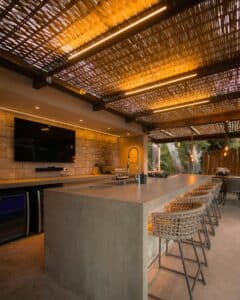
Choosing between a built-in and freestanding grill affects much more than how your outdoor kitchen looks. It influences the layout, available countertop space, installation cost, flexibility, and how easily you can replace or upgrade your grill later.
Built-in grills are usually the preferred option for permanent outdoor kitchens because they integrate directly into the surrounding counters and cabinetry. Freestanding grills offer something different: flexibility, simpler installation, and usually a lower initial investment.
Neither is automatically better. The right choice depends on whether you’re building a permanent outdoor cooking space or simply want a convenient place to grill.
What Is the Difference Between a Built-In and Freestanding Grill?
The cooking equipment itself can be surprisingly similar. The biggest difference is how the grill becomes part of the outdoor space.
A built-in grill is installed into a purpose-built outdoor kitchen island or cabinetry. Instead of having its own cart, wheels, and side shelves, the grill head sits within the structure.
A freestanding grill is a complete unit. It typically includes:
- A grill head
- Supporting cart or cabinet
- Wheels or casters
- Side shelves
- Storage underneath
That makes freestanding grills much easier to move or replace.
Built-in grills are essentially treated as part of the outdoor kitchen itself. That creates a cleaner finished appearance, but it also means dimensions, ventilation, utilities, and surrounding materials need to be considered during the design process.
Built-In Grill Pros and Cons
For homeowners creating a complete outdoor kitchen, built-in grills offer some major advantages.
Advantages
More integrated design
The grill can sit alongside countertops, drawers, refrigerators, sinks, and other appliances rather than looking like a separate piece of equipment.
Better use of workspace
Instead of relying on relatively small grill side shelves, you can design substantial preparation and serving areas around the grill.
More customization
The kitchen can be designed around how you actually cook. Storage, trash drawers, utensils, ingredients, and preparation surfaces can all be positioned where they’re most useful.
Permanent appearance
A properly designed built-in grill makes the entire space feel more like an outdoor kitchen than a collection of individual appliances.
Trade-Offs
That integration comes with additional considerations:
- Higher overall project cost
- More complicated installation
- Proper ventilation and clearances must be planned
- Gas and electrical connections may need professional installation
- Future grill replacements require compatible dimensions or modifications
The grill itself is only one part of the investment. You’re creating a permanent structure around it, which makes planning especially important.
Freestanding Grill Pros and Cons
A freestanding grill can still be an excellent choice, especially when flexibility matters more than creating a fully integrated outdoor kitchen.
Advantages
Lower upfront cost
You aren’t paying for custom cabinetry or an island specifically designed around the grill.
Easy to replace
When the grill eventually needs replacement, you can remove it and purchase another model without rebuilding part of the kitchen.
More flexibility
Freestanding grills can be repositioned as your backyard changes. This can be particularly useful for renters or homeowners who aren’t ready to commit to a permanent outdoor kitchen.
Simpler installation
Propane models may require very little setup compared with a built-in grill connected to permanent utilities.
Trade-Offs
- Less integrated appearance
- Limited preparation space
- Less storage than a complete outdoor kitchen
- Takes up additional floor space
- Harder to create an efficient cooking workflow around the grill
A freestanding grill makes plenty of sense when grilling is the primary goal. It becomes less appealing when you want the backyard to function as a complete kitchen and entertaining area.
Built-In vs. Freestanding Grill Cost
A direct price comparison can be misleading because you’re really comparing two different types of projects.
With a freestanding grill, you’re primarily buying the appliance.
With a built-in grill, expenses can include:
- Grill head
- Cabinetry or island construction
- Countertops
- Gas connections
- Electrical work
- Ventilation components
- Storage
- Professional installation
That makes the built-in option considerably more expensive as a complete project.
However, homeowners shouldn’t choose a freestanding grill simply because it costs less if they already know they want a permanent outdoor kitchen. Retrofitting a backyard later can mean paying for temporary equipment now and then starting over when the full kitchen is eventually built.
What Happens When You Need to Replace the Grill?
This is one of the most overlooked differences between built-in and freestanding grills.
Replacing a freestanding grill is straightforward. Move the old unit out and replace it with another one.
Built-in grills require more planning.
The opening in the outdoor kitchen is constructed around specific grill dimensions. Years later, the exact model may no longer be available. A replacement with different dimensions can require modifications to the countertop, cabinet structure, trim, or utility connections.
This doesn’t mean built-in grills are a bad long-term choice. It means serviceability should be considered during the original design.
Choosing established equipment manufacturers, planning accessible utility connections, and avoiding unnecessarily restrictive construction can make future repairs and replacements much easier.
When Should You Choose a Freestanding Grill?
A freestanding grill is usually the better choice when:
- You primarily want somewhere to grill
- Your budget is limited
- You may move within the next few years
- Your backyard layout could change
- You don’t need extensive storage or preparation space
- You want the freedom to replace equipment easily
There’s little reason to build an entire outdoor kitchen if you’ll rarely use anything beyond the grill.
When Is a Built-In Grill Worth It?
A built-in grill makes more sense when the goal is to create a permanent outdoor cooking and entertaining space.
It’s particularly valuable when you want:
- Generous preparation surfaces
- Dedicated outdoor storage
- Multiple cooking appliances
- Refrigeration or a sink
- Seating or serving areas
- A cohesive backyard design
The biggest advantage isn’t necessarily better grilling. It’s everything that can be designed around the grill.
For homeowners planning a permanent setup, professional outdoor kitchen design and installation can also account for appliance clearances, utilities, ventilation, workflow, and future service access before construction begins.
Bottom Line: Built-In or Freestanding?
Choose a freestanding grill if flexibility, affordability, and easy replacement are your priorities.
Choose a built-in grill if you’re committed to creating a permanent outdoor kitchen and want the grill integrated with countertops, storage, appliances, and entertaining space.
A freestanding grill is often the more practical grilling purchase. A built-in grill becomes the better choice when you’re investing in the backyard as a complete cooking environment.