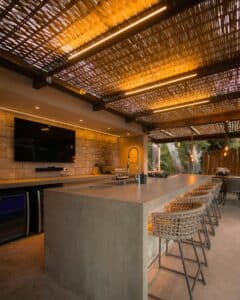
Why Stainless Steel Is a Popular Outdoor Countertop Material
Stainless steel has been used in commercial kitchens for decades because it is built to handle heat, moisture, and heavy daily use. Those same qualities have made it an increasingly popular choice for outdoor kitchens, especially in modern and contemporary designs.
Unlike many countertop materials, stainless steel is non-porous. It does not absorb grease, sauces, or moisture, making it one of the easiest surfaces to clean after cooking. That makes it especially appealing for homeowners who grill frequently or entertain often.
However, stainless steel is not perfect. It scratches more easily than natural stone, reflects heat differently, and has an industrial appearance that may not suit every backyard.
Choosing stainless steel is less about whether it is “good” and more about whether its strengths align with how the outdoor kitchen will be used. If you’re still comparing all of the major countertop options, our guide to the best materials for outdoor kitchen countertops provides a broader overview before diving into stainless steel specifically.
How Stainless Steel Performs Outdoors
Stainless steel is one of the most durable countertop materials available for outdoor use, but its performance depends on understanding both its strengths and limitations.
Heat resistance
Stainless steel easily handles the temperatures produced by built-in grills, side burners, and pizza ovens. Unlike engineered materials, it will not scorch or crack from normal cooking heat.
Moisture resistance
Because stainless steel is non-porous, it resists water damage extremely well. It will not absorb moisture, making it a smart choice for humid climates or outdoor kitchens that are exposed to rain.
Hygiene
One of stainless steel’s biggest advantages is that bacteria, mold, and food residue have very few places to collect. Its smooth surface makes cleanup quick and helps maintain a sanitary cooking environment.
Durability
Quality outdoor-grade stainless steel withstands years of use with very little structural wear. However, durability does not mean the surface will remain flawless. Cosmetic scratches and fingerprints are part of owning stainless steel and should be expected rather than viewed as defects.
The Biggest Trade-Offs of Stainless Steel
Stainless steel performs exceptionally well outdoors, but it comes with compromises that homeowners should understand before choosing it.
Advantages
- Outstanding heat resistance
- Won’t absorb moisture or food stains
- Easy to clean after cooking
- Extremely durable for long-term outdoor use
- Modern, professional appearance
Trade-Offs
- Scratches develop with normal use
- Fingerprints and smudges are more noticeable
- Can become hot to the touch in direct sunlight
- Industrial look may not complement every home
Many homeowners worry that stainless steel will rust outside. High-quality outdoor-grade stainless steel is specifically designed to resist corrosion, although regular cleaning is still important—especially in coastal environments where salt air can accelerate surface corrosion if left unchecked.
For homeowners who prioritize performance and low maintenance over achieving a perfectly uniform appearance, stainless steel remains one of the most practical countertop materials available.
Stainless Steel vs Granite for Outdoor Kitchens
Stainless steel and granite are both excellent outdoor countertop materials, but they serve different priorities. The better choice depends on whether you value easy maintenance, appearance, or long-term durability.
Stainless Steel
Strengths
- Extremely hygienic and easy to clean
- Outstanding resistance to heat and moisture
- Modern, professional appearance
- Doesn’t require sealing
Trade-Offs
- Scratches with everyday use
- Shows fingerprints and smudges
- Can become hot in direct sunlight
- Industrial look isn’t for everyone
Stainless steel is often the preferred choice for homeowners who cook outdoors frequently and want a surface that’s easy to maintain.
Granite
Strengths
- Natural stone appearance
- Excellent resistance to UV exposure
- Highly durable in outdoor environments
- Hides everyday wear better than stainless steel
Trade-Offs
- Requires periodic sealing
- Can stain if left unprotected
- More difficult to repair if chipped
Granite is usually the better fit for homeowners who want a timeless appearance with strong long-term outdoor performance.
A simple way to compare them is this:
| If you prioritize… | Better choice |
|---|---|
| Low maintenance | Stainless steel |
| Natural appearance | Granite |
| Commercial-style cooking | Stainless steel |
| Traditional backyard design | Granite |
| Heat resistance | Both perform exceptionally well |
Neither material is objectively better. The right choice depends on how the outdoor kitchen will be used and the overall style of the space.
When Stainless Steel Makes the Most Sense
Stainless steel is an excellent choice for homeowners who value function above all else.
It works particularly well for:
- Frequent outdoor cooking where cleanup needs to be quick and simple.
- Modern or contemporary outdoor kitchens with clean architectural lines.
- Homes in humid climates where moisture resistance is especially important.
- Outdoor kitchens with multiple built-in appliances, creating a cohesive professional appearance.
Because stainless steel is commonly used for grills, drawers, refrigerators, and access doors, choosing a stainless steel countertop can create a consistent, integrated design throughout the kitchen.
For homeowners designing a complete outdoor cooking space, working with professionals experienced in custom outdoor kitchen design and installation helps ensure the countertop complements the overall layout, appliance selection, and long-term maintenance goals.
How to Maintain Stainless Steel Countertops
One of stainless steel’s biggest advantages is that maintenance is straightforward.
A few simple habits keep the surface performing and looking its best:
- Wipe the countertop after cooking to remove grease, sauces, and food residue before they dry.
- Clean with mild soap and water or cleaners specifically designed for stainless steel. Abrasive products can dull the finish.
- Dry the surface after washing to minimize water spots, especially in areas with hard water.
- Clean more frequently near the coast, where salt air can build up on the surface over time.
Scratches are part of normal use and should be expected. Many homeowners find that as additional fine scratches develop, they blend together into a more uniform finish that is less noticeable than the first few marks.
Bottom Line – Is Stainless Steel a Good Outdoor Kitchen Countertop?
Yes. Stainless steel is one of the most practical countertop materials for outdoor kitchens, especially for homeowners who cook often and prioritize durability over a flawless appearance.
Its resistance to heat, moisture, and staining makes it exceptionally well suited for outdoor cooking environments. While scratches and fingerprints are part of owning stainless steel, they are largely cosmetic and do not affect performance.
If easy maintenance, long-term durability, and professional-level functionality are your priorities, stainless steel is one of the strongest countertop options available.