The Problem: Grease Builds Up Faster on Sacramento Grills
If your grill seems to get greasy again almost immediately after cleaning, you’re not imagining it. In Sacramento, grills tend to build up grease faster than in cooler or coastal areas, even when homeowners clean regularly.
There are a few local factors working together here. Sacramento’s long, hot summers mean grills are used more often and for more months of the year. High ambient temperatures keep fats semi-liquid longer, so grease spreads instead of hardening and flaking off. Add direct sun exposure on uncovered patios and you get residue that softens, migrates, and re-bonds to surfaces instead of drying out.
The result is familiar to a lot of Sacramento homeowners: more flare-ups, heavier smoke, and grills that feel dirty again within weeks, not months. This isn’t about poor habits. It’s about how grease behaves in sustained heat.
What’s Actually Happening Inside Your Grill
Grease doesn’t just sit on the grates. Once it melts, it moves.
In high heat environments like Sacramento, cooking fats drip down, liquefy quickly, and coat internal components before they ever have a chance to burn off. Over time, this creates layers of sticky grease mixed with carbon, especially in areas that don’t reach full burn-off temperatures.
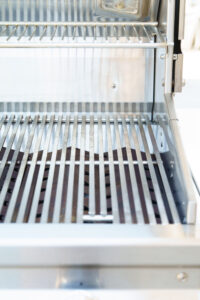
The most common buildup zones we see locally are flavorizer bars and heat tents, burner shields and burner ports, firebox corners that trap residue, and drip trays that never fully dry between cooks.
This is also why “just burn it off” doesn’t work as well here. Burning off helps with surface carbon, but it doesn’t remove grease that has already soaked into internal parts. In extreme heat, repeated burn-offs can actually bake grease into a thicker, harder layer that’s more difficult and less safe to remove later.
How to Diagnose a Grease Problem (Not Just a Dirty Grill)
A greasy grill behaves differently than a grill that’s simply due for a routine clean. Knowing the difference matters, especially in hot climates.
Signs you’re dealing with grease saturation rather than normal residue include a greasy smell before the grill is even turned on, flare-ups happening at medium heat, uneven or yellow flames, heavy smoke when cooking lean foods, and surfaces that feel sticky again shortly after cleaning.
In Sacramento, these symptoms show up faster because grease rarely gets the chance to fully dry or break down naturally. If cleaning seems to “wear off” quickly, that’s a strong indicator that grease has moved past the grates and into internal components.
At this point, the problem isn’t effort. It’s access and timing.
What Actually Works for Cleaning Grease in Sacramento Heat
In Sacramento, when and how you clean matters just as much as what you use. Extreme heat changes how cleaners behave and how grease responds, which is why methods that work fine elsewhere can be frustrating or unsafe here.
Timing is the first factor. Cleaning a grill that’s already hot from the sun or recent use makes grease softer and more likely to smear deeper into surfaces instead of lifting off. Early morning or evening cleaning gives you a cooler grill and more control, especially when degreasing internal components.
Controlled degreasing works better than aggressive burn-offs in this climate. While a short burn can loosen surface residue, relying on high heat alone often bakes grease onto flavorizer bars, burner covers, and firebox walls. That hardened layer becomes harder to remove later and increases flare-up risk during cooking.
Moisture-based methods like steam can help break down grease, but only when used carefully. Applying moisture to an already overheated grill can create uneven cooling, warp components, or drive grease into seams and crevices. In Sacramento heat, steam should be used on a cool grill and followed by proper drying to prevent residue from re-bonding.
DIY cleaning reaches its limit once grease has soaked into internal parts. If burners, ignition areas, or firebox corners stay greasy after repeated cleanings, more scrubbing won’t fix it. At that point, deeper disassembly and targeted degreasing are required to clean safely without damaging components.
Preventing Rapid Grease Rebuild Between Cleanings
Because grills in Sacramento are used more often and exposed to more heat, prevention matters more than most homeowners realize.
Cleaning frequency usually needs to increase during peak summer months. This doesn’t mean deep cleaning every time, but light post-cook maintenance helps prevent grease from staying soft and spreading. A quick grate brush while warm, followed by clearing excess grease from catch trays, goes a long way.
Drip tray management is critical here. In hot weather, trays that aren’t emptied regularly can overflow or re-liquefy, allowing grease to travel back into the grill. Keeping trays clean and dry reduces internal saturation dramatically.
Post-cook habits also matter. Letting the grill cool with the lid open briefly allows moisture and heat to escape, slowing grease bonding. Closing a hot, greasy grill traps heat and accelerates buildup on internal surfaces.
Finally, storage and sun exposure play a role. Grills left in direct sunlight stay warmer for longer periods, even when not in use. Using a breathable cover and positioning the grill out of full afternoon sun can noticeably slow grease accumulation over time.
When It’s Time to Call a Professional (And Why Heat Changes That Line)
In Sacramento, the line between DIY cleaning and professional service shows up sooner than many homeowners expect. Extreme heat doesn’t just accelerate grease buildup. It also increases risk once grease moves beyond surface-level areas.
If grease has reached burner tubes, ignition components, or deep firebox corners, DIY methods become less effective and more risky. Scraping or spraying in these areas can push grease deeper into ports and seams, leading to uneven flames, ignition problems, or delayed flare-ups during cooking.
Another clear warning sign is persistence. When flare-ups continue after multiple cleanings, or thick smoke appears even at moderate temperatures, grease has usually saturated internal components. At that stage, burning hotter or cleaning more aggressively often makes the problem worse by baking residue into hardened layers.
During Sacramento heat waves, this boundary matters even more. High temperatures increase the chance of warped components, damaged igniters, or unsafe cleaning conditions. This is typically when a Sacramento grill cleaning service becomes less about convenience and more about safety, proper access, and restoring the grill without causing damage.
When grease problems stop responding to routine maintenance, the issue isn’t effort. It’s reach, control, and knowing when professional degreasing is the safer option.
The Bottom Line for Sacramento Grill Owners
Grills in Sacramento get greasy faster because heat keeps grease soft and mobile, not because homeowners are doing anything wrong. Long grilling seasons, high ambient temperatures, and sun exposure all work together to push grease deeper into the grill instead of letting it dry out or burn away.
Burning off residue helps on the surface, but it doesn’t remove grease that has already migrated inside. Cleaning at cooler times of day, using controlled methods, and paying attention to drip trays and internal buildup makes a real difference in how long a grill stays clean and safe.
The key is knowing where DIY cleaning stops being effective. In Sacramento heat, grease problems are much easier to prevent than to undo. Staying ahead of buildup keeps your grill more consistent, reduces flare-ups, and helps it last longer through the hottest months of the year.